Pages

Showing posts with label Iraq. Show all posts

Saturday, 10 October 2020

A Week in Pictures, Middle East and Africa, October 9, 2020

A striking picture of wild fires in Lebanon from Mohamed Azakir, the silhouetted trees giving a sense of scale against the raging fires and night skies. 

Wildfires burn a forest in Chbaniyeh village, Lebanon October 9, 2020.  REUTERS/Mohamed Azakir 

Thomas Mukoya captures the moment Liban Abdullah Omar reacts to his acquittal of involvement in the Westgate attack. As the tear is wiped away he looks across the picture frame into the space left by the empty seat. This space creates a sense of momentary calm and quiet. I love the way his other hand is delicately holding another tissue. What I would like to make disappear is the white square to the left but crop it out and the image loses its shape. Read on here.  
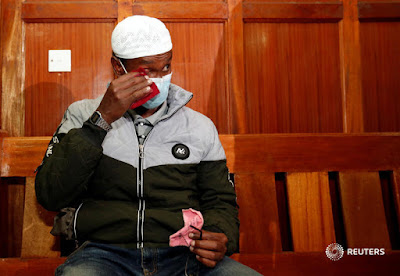
Liban Abdullah Omar reacts after he was acquitted at the Milimani Law Courts in Nairobi, Kenya October 7, 2020. REUTERS/Thomas Mukoya

We are left in no doubt by Mike Hutching’s picture that this is about – anti-corruption. The black bold letters scream out against the reds of the banners, adding to the noise of the shouting likely coming from the open mouth. In fact this picture is so noisy we hardly notice the quite acute angle of the tilt as Mike composes his frame.    

Members of the Congress of South African Trade Unions (COSATU) carry placards as the take part in a nationwide strike over issues including corruption and job losses in Cape Town, South Africa, October 7, 2020. REUTERS/Mike Hutchings 

Zohra builds her picture up by using the framing of the black gates, the centrally placed minaret and a low angle to let the figures play into the stage she has composed. This feeling of stage may also be enhanced by the bright reds, greens and yellows worn by the “actors” as they move into the setting.    

A faithful stands with hand sanitiser at the entrance of the Great Mosque as hundreds of thousands of Senegalese Mouride Brotherhood pilgrims gather for the annual Grand Magal festival, as the global spread of the coronavirus disease (COVID-19) continues, in the holy city of Touba, Senegal October 5, 2020. REUTERS/Zohra Bensemra

You have to work hard to look into the shadows of Essam al-Sudani’s picture through the glare of the flames to see what is going on. Once you do, you are a little too visually exhausted to be met with the sad vision of three boys playing in the fumed-filled air among the rubbish on the ground.  

Children play with flames rising from oil refinery pipes in the background in Basra, Iraq July 23, 2020.  REUTERS/Essam al-Sudani 

As far as the eye can see bricks and more bricks make up a smoky, desolate landscape captured by Abdullah Dhiaa Al-Deen. The sun beats down to bleach all colour from the picture as we are drawn to the single focal point of the figure labouring away, with that set between the two other secondary features in the picture, the chimneys spewing smoke.  

An Iraqi labourer works as a brick factory's chimney belches out smoke in Najaf, Iraq September 22, 2020. Picture taken September 22, 2020. REUTERS/Abdullah Dhiaa Al-Deen

Abdullah Dhiaa Al-Deen captures the momentarily upturned face of the boy whose mouth takes the shape of the Melpomene, the muse of tragedy mask, but the image is buried in the mass of swirling mass of arms, faces, reds and blacks. Once you spot him it’s hard to look away: even as the eye is distracted by the beauty of the lights in the background, you are drawn back to his face again.  

Shi'ite Muslim pilgrims take part in a mourning ceremony, ahead of the holy Shi'ite ritual of Arbaeen, amid the outbreak of the coronavirus disease (COVID-19), in Kerbala, Iraq, October 7, 2020. REUTERS/Abdullah Dhiaa Al-Deen

Two things strike me immediately about Muhammad Hamed’s wonderful picture; the stoic nature of what looks like lonely work and the greyness of the classroom devoid of students. But this initial impression of loneliness and grey quickly disappears when we look at her face, the energy of her teaching of what looks like trigonometry. You can then imagine the children all at home watching online. And on the subject of angles and shapes, we are drawn by the  arc of the projector cable from one side of the picture through her arm to the pen poised on the white board. 

A private-school teacher gives an online lesson to students receiving distance education, amid fears of a rising number of coronavirus disease (COVID-19) cases in Amman, Jordan October 7, 2020. REUTERS/Muhammad Hamed 

Who can resist an image that has bright orange and yellow flames reflected in a black pool of water with the additional focal point of a cloaked figure poised mid-step? Not me. A visual treat from Afolabi Sotunde that delights us with moment, colour and composition. The story behind this powerful image is not so delightful as we learn of energy waste and pollution. Read on here

A reflection of two gas flaring furnaces and a woman walking on sand barriers is seen in the pool of oil-smeared water at a flow station in Ughelli, Delta State, Nigeria September 17, 2020. REUTERS/Afolabi Sotunde

Bolts and padlocks add a literal sense to coronavirus (COVID-19) lockdown in Mohammed Salem’s thoughtfully shot picture of food being delivered. Timing is all important to get the figure at the centre of the smallest of gaps and it’s not an easy one to expose for either.   

A worker is seen through an opening in a school door as he carries a sack of flour distributed by UNRWA to be delivered to a Palestinian family amid the coronavirus disease (COVID-19) outbreak, in Gaza City October 7, 2020. REUTERS/Mohammed Salem


Friday, 18 September 2020

A Week in Pictures, Middle East and Africa, September 18, 2020

What great shape and composition in Mohamad Torokman’s striking image. The circle of solid black smoke is punctured by the streak of tear gas being thrown back, visually helping the composition as it’s almost aimed into the very top left corner of the frame. The heavy pale grey smoke of the gas forms a backdrop for the perfectly framed and silhouetted figure who is in profile, so we clearly see he is wearing a gas mask.  

A Palestinian demonstrator returns a tear gas canister fired by Israeli troops during protest against Jewish settlements and normalizing ties with Israel, in Asira al-Qibliya in the Israeli-occupied West Bank September 18, 2020. REUTERS/Mohamad Torokman

It takes a little time to get to grips with the scale of Ronen Zvulun’s picture until you see the tiny figures bottom right. It’s then you begin to get a sense of the stone wall and the battlements, finally picking out more figures placed centrally. This might be because you are visually preoccupied with bright colours set against the solid slab of black of the sky.  

The flags of the United States, Israel, United Arab Emirates and Bahrain are projected on a section of the walls surrounding Jerusalem's Old City, as United Arab Emirates and Bahrain sign agreements toward normalising relations with Israel at a White House ceremony, in Jerusalem, September 15, 2020. REUTERS/Ronen Zvulun

What a powerfully sad picture from Alaa al-Marjani. A complex composition as the scene appears divided in two. On the left we have two people, completely unprotected against any disease lowering a wrapped and exhumed body into a rough coffin. And on the right, a figure seemingly divorced from the activity, sitting at rest barefoot in the sand, looking as if nothing out of the ordinary is happening. Maybe for him this is nothing out of the ordinary? Read on here

Iraqi men carry the corpse of a man who, according to his relatives, died of the coronavirus disease (COVID-19), after they dug it up to be transferred to the "Valley of Peace" cemetery on the outskirts of the holy city of Najaf, Iraq September 12, 2020. Picture taken September 12, 2020. REUTERS/Alaa Al-Marjani

Hamad I Mohammed’s picture intrigues us as it appears that hands, arms and heads are in danger of being severed by what momentarily looks like a steel medical chopping device, sliding back and forth. The sense of discomfort is added to by the expression of the man’s face and doubled by the reflection. The sense of a machine is suggested by the sharp lines of the window, the cold tones of the blues and whites, and the concrete walls.     

A Saudi national travelling into Bahrain gets a nose swab at an immigration checkpoint on the King Fahd Causeway that reopened after coronavirus disease (COVID-19) restrictions were eased, at the Bahrain-Saudi border, Bahrain, September 15, 2020. REUTERS/Hamad I Mohammed

A simple detail picture from Mohammed Salem works well because it’s set against a clean background as a hand reaches in to take the small bird from a net it’s captured in. What is important is that the bird’s beak is in profile, and the eye, legs and feet are clearly seen. Without these tiny details we’d lose the sense of this being a trapped bird.  

A Palestinian man takes out a quail from a net after catching it in the central Gaza Strip September 14, 2020. REUTERS/Mohammed Salem

Even though Yaman Al Shaar has shot her picture quite wide you still get the powerful feeling of care, concern and nervousness as the children help each other to sanitise their hands on returning to school. The scene is taking place under the watchful eye of the teacher and portraits of Syrian President Bashar al-Assad.   

A student sanitizes the hands of her classmate in a classroom as a school year kicks off amid concerns about the spread of the coronavirus disease (C0VID-19), in Damascus, Syria September 13, 2020. REUTERS/Yamam Al Shaar

I don’t think there is any way you can look at Amr Abdullah Dalsh’s picture without feeling a smile creep across your lips. Pushing aside the thought of the possible dreadful smell of the camel’s breath the question you might ask yourself, would this picture work better cropped tighter? If the camel’s eye was cropped out, you’d get more teeth and a closer look at the man’s expression, or left wider to leave more of the man’s ear and a better shape to include the curve of his head? It’s one of those pictures no matter how you crop it, or no matter how long it took to be finally published, it will work. Read on here.

Hossam Nasser, 32, plays with his camel "Anter" in front of his house in the Nubian village of Gharb Soheil, on the west bank of the Nile river in Aswan, Egypt February 19, 2020. REUTERS/Amr Abdallah Dalsh

Equally satisfying from Amr Abdullah Dalsh is the carefully composed, quiet and cool toned image from the same story. I love the visual game that Amr has played as he waited for the cat to walk into the door space, its front legs at a perfect inverted V, towards the waiting arms of the Nile God Hapi. Without the cat no picture.  

A cat walks beside Egyptian hieroglyphs carved for "Hapi" God of the Nile on the wall at Temple of Philae in Aswan, Egypt February 18, 2020. Picture taken February 18, 2020. REUTERS/Amr Abdallah Dalsh

A subtle and quiet picture from Amir Cohen to illustrate people preparing for lockdown in Israel. I am not a fan of silhouette pictures, but this really is a step above most as you get real sense of a pensive atmosphere. You are drawn into the rear of the picture and guided visually by the flags to the couple heading off into the backlight. A vertical line drawn between the flags bisects the space leading you down to the couple. If you take the time to think about the lockdown, you might get the sense that they are heading off into an uncertain future, or if you are more pragmatic with your thoughts, they could be heading home with the week’s food shopping. Read on here.

Israelis shop at the market before Israel will enter a second nationwide lockdown amid a resurgence in new coronavirus disease (COVID-19) cases, forcing residents to stay mostly at home during the Jewish high-holiday season, in Ashdod, Israel September 18, 2020. REUTERS/Amir Cohen

Text edited by Giles Elgood 

Friday, 10 July 2020

A Week in Pictures, Middle East and Africa, July 10, 2020

A brutal and sad picture by Thalefang Charles. The elephant appears to reach out to the viewer with its trunk at the moment of its death in a barren landscape. There is no escaping the black hollow of the animal’s eye or the gaping hole where a tusk would have once been as we are led along the line of the trunk and the animal’s back to the tiny figure of a vet in the background.  Read on here 

Dr Wave Kashweeka, Principal Veterinary Officer stands over the carcass of an elephant found near Seronga, in the Okavango Delta, Botswana, July 9, 2020. REUTERS/Thalefang Charles

At first glance we are not sure if the screen on the left is a TV or a mirror. Ari Jalal has used the mirror hanging in the temporary accommodation to enable us to both look in and out of this room at the same time.  We get a sense of people being busy, the hurried tension of a small space, change happening. I love the body language of the young man in the doorway, as though he is saying “come on, get a move on”, but can’t out of respect to the others he shouldn’t really rush.  Read on here.

Yazidi displaced family of Nayef al-Hamo is reflected in the mirror as they prepare to leave their home in Sharya town and head back to Sinjar following the outbreak of the coronavirus disease (COVID-19) and economic crisis, near Dohuk, Iraq July 3, 2020. REUTERS/Ari Jalal

A wide and slightly compositionally chaotic picture from Philimon Bulawayo as the eye chases around looking for a focal point. It’s rather visually uncomfortable with figures running out of the frame left and right and the line of trees and sky cutting mercilessly across the frame into the head of the central figure, who seems to be coming up for air. But it’s what written on the sign that comes as bit of a shock and is uncomfortable reading.  
Health workers carry placards as they protest against economic hardship and poor working conditions during the coronavirus disease (COVID-19) outbreak in Harare, Zimbabwe, July 6, 2020. REUTERS/Philimon Bulawayo 

Two terrific pictures by two photographers working on one story about the convergence of the Nile. In the first by Zohra Bensemra we are immediately intrigued by the brown swirling mass “penned” in by trees left and right, a centrally placed figure making us wonder what is going on. I love the detail of his shoes on the right-hand side of the frame and the dappled light coming through the rough and ready roofing as we slowly begin to understand he is squashing mud with his feet. Read on here.

David Plantino, 35, a pottery maker from South Sudan, kneads mud with his feet, that will be used to make pottery at a workshop in an area known as the 'Potters Village' in Alqamayir, Omdurman, Sudan February 16, 2020. "I have been a pottery maker for 7 years, I relied on the Nile river like most people around me here for water and the mud", Plantino said. "Both are the foundation for people who rely on pottery to make a living." REUTERS/Zohra Bensemra

Mohamed Nureldin Abdallah entertains us with a beautiful abstract curve through his picture leaving us unsure of a sense of scale. We are initially confused by the flat grey shape that has a mirror-like quality and then the abandoned chairs snap into focus. We are looking at the waters edge of the Nile.       

Chairs are left facing the banks of the Blue Nile river in Khartoum, Sudan, February 15, 2020. REUTERS/Mohamed Nureldin Abdallah 

Just how much do you want to swim in that pool? Ahmed Jadallah’s picture is pleasing on so many levels: the colours, the shapes, the teasing shadows of the trees and the tantalising ripples on the water and that small figure, arms stretched out luxuriating in the warm water.  Dive in and have some fun, I wish. 

People swim at a swimming pool in the Atlantis The Palm hotel, as the Emirates reopen to tourism amid coronavirus disease (COVID-19), in Dubai, United Arab Emirates July 7, 2020. REUTERS/Ahmed Jadallah

Anees Mahyoub’s picture is striking as the graves are so deep, dark and so close together. What is to stop the walls of sand and mud falling in the diggers? But it’s the small details next to the sad and ugly gaping holes that gives this image its strength: like the pickaxe between the graves and the feet of the bystander. Read on here.

People dig graves at a cemetery where victims of the coronavirus disease (COVID-19) are buried in Taiz, Yemen June 23, 2020. Picture taken June 23, 2020. REUTERS/Anees Mahyoub 

A very busy but at the same time simple half-length environmental portrait by Muhammad Hamed works so well that you just want to meet this doctor. The direct eye contact draws you straight into his gentle, concerned but reassuring face past all the visual noise, his clean white jacket helping you make that journey. Once you have looked him in the eye then you can enjoy the rest of the room. I love the echo of his fingers in the brochure dispenser on the left of the image 

Jordanian doctor Nizar al Halaby poses at his clinic in Amman, Jordan, July 5, 2020. Picture taken July 5, 2020. REUTERS/Muhammad Hamed

I think Yamam al-Shaar has captured a moment of work that seems like it will never end. A single figure, masked against coronavirus set against a wall of boxes.  Not an inch of respite for her amid the boxes that completely fill the frame and bear down on her. 
A worker wearing a face mask holds an ice cream box inside an ice cream factory in Damascus, Syria July 2, 2020. Picture taken July 2, 2020. REUTERS/Yamam Al Shaar 

Is this bride dancing in Amir Cohen’s picture dancing? Why is she letting her beautiful wedding dress get dirty? Why on earth would she want to be photographed in an area that looks like an industrial estate? All these questions raised by a beautifully composed and side lit picture enables the viewer to make up their own story for this strong and affectionate standalone image of happiness.  
A bride walks on the shore of the Mediterranean Sea as she is photographed before her wedding amid the spread of the coronavirus disease (COVID-19), in Ashdod, Israel July 6, 2020. REUTERS/Amir Cohen

I feel in Thomas Mukoya’s picture as if this train is bearing down on me. I am the proverbial rabbit in the headlights as others scatter left and right away from its path. An effect created by careful exposure to allow the highlight of the train’s light to burn out. A quick look at the track and you see the kink in the line so we know it’s not travelling all that fast, time enough for me to scuttle away too.  

A commuter train arrives at a makeshift station, amid the spread of the coronavirus disease (COVID-19), at the Kibera slums, in Nairobi, Kenya July 6, 2020. REUTERS/Thomas Mukoya

In Mohamed Azakir’s wonderfully lit picture a yellow cushion seems to come to life with a facial expression that sums up the whole situation. It’s only then we notice the central figure in the gloom, and the candle light is neither kind or romantic but a necessity as powers cuts mean no electricity. Read on here.

Badiaa, 75, lights a candle and a portable light to light up the room due to a power cut in Beirut, Lebanon July 6, 2020. Picture taken July 6, 2020. REUTERS/Mohamed Azakir 


Friday, 3 July 2020

A Week in Pictures, Middle East and Africa, July 3, 2020

Mohamed Torokman’s picture is just crammed full of action and so perfectly timed that I don’t think it can be any better. The background is solid with black smoke, the soldiers rifle barrel glints against it as flames roar with reds, oranges and yellows. We are given enough highlight detail of the soldier at the height of his jump, so he stands out from the heavy smoke. The dust trailing from his back foot gives us a clue to the speed at which he is running. Read on here. 

An Israeli border police member jumps during a Palestinian protest against Israel's plan to annex parts of the Israeli-occupied West Bank, in Kafr Qaddum near Nablus July 3, 2020. REUTERS/Mohamad Torokman 

The light of the motorcycle beams through what at first appears as to be heavy rain being displaced by the speeding bike in Baz Ratner’s terrific picture. But what we see against the shadows and dark tones of the bush are in fact thousands of locusts being scattered from the road. The hills in the background give us a sense of the size of the locust swarms that are devastating the pastoral lands of Turkana.  Video explaining the issue here.

A motorcycle rider tries to protect his eyes as he drives through a swarm of desert locusts at the village of Lorengippi near the town of Lodwar, Turkana county, Kenya, July 2, 2020. REUTERS/Baz Ratner

I can’t help feeling a little sad as I look at Alaa Al-Marjani’s picture although I know maybe I am possibly misinterpreting the body language. Even though the man at the window wants to get in closer to his relative, the only thing stopping him is the glass but the patient is keeping away, he is sitting on the edge of the bed, his body turned away. Alaa has used the space between these men and the red blanket to drive home a real sense of uneasy distance. 

An Iraqi man infected with the coronavirus disease (COVID-19) talks with his relative through a quarantine window at Al-Hakim Hospital in the holy city of Najaf, Iraq June 16, 2020. Picture taken June 16, 2020. REUTERS/Alaa Al-Marjani 

There is such a feel-good factor in Mohamed Abd El Ghany picture it makes you want to go straight away to Egypt and pay over the odds to ride on this camel. A big smile, bright colours, blue sky and mirrored glasses to welcome tourists as the guide struggles to keep control of the camel. Its almost reptilian in appearance head and neck breaks the skyline filling the space in the sky left by the pyramid, the restraining chain continuing the line of the compositional triangle. 

A man with a camel is seen in front of the Great Pyramids of Giza after reopening for tourist visits, following the outbreak of the coronavirus disease (COVID-19), in Cairo, Egypt July 1, 2020. REUTERS/Mohamed Abd El Ghany

Dust, heat, tension and potential chaos all crammed into one frame by Mohamed Nureldin Abdallah. The picture seems to go from icy blue of the soldiers to the dusty yellow/orange heat of the protesters in the background. I love the small details of the outstretched fingers  reaching into the murk. 

Riot police officers hold position against protesters near the Parliament buildings, as members of Sudanese pro-democracy protest on the anniversary of a major anti-military protest, while groups loyal to toppled leader Omar al-Bashir plan rival demonstrations, in Omdurman, Khartoum, Sudan June 30, 2020. REUTERS/Mohamed Nureldin Abdallah 

What a beautifully composed picture by Njeri Mwangi as the red gloved action takes places against a backdrop of lines, shapes and shadows that cut across the frame like giant brushstrokes as a cubist painter sets out their canvass. What I especially like is how the edge of the shadow cuts down dra you eye to the highlight of the boxer’s face. 

A child hits a punching bag as she attends a boxing training session at the Mathare North Boxing Club, after the government ordered closure of all schools due to the coronavirus disease (COVID-19) outbreak, in Nairobi Kenya June 17, 2020. Picture taken June 17, 2020. REUTERS/Njeri Mwangi

The lifted arms of the solitary figure in Khaled Abdullah picture says it all ‘Oh no what now?’ We are left in no doubt that his livelihood is destroyed as he walks on the smoldering rubble. The bright orange shirt, really the only colour in the frame, and his position at the bottom of the wide compositional V of the twisted metal snaps our attention straight to his despair.      

A worker reacts as he stands on the wreckage of a vehicle oil and tires store hit by Saudi-led air strikes in Sanaa, Yemen July 2, 2020. REUTERS/Khaled Abdullah 

To make a cleaner image one might be tempted to crop out the car in the rear of Mussa Qawasma’s picture to highlight even more the joy of the boy’s face as he plays in the smoke; but try it with your thumb. Suddenly something is lost. I think what makes this such fun is the fact that this strange opportunist game is taking place in the street and it’s the context of the ordinary that highlights the joy. 

A Palestinian boy plays as disinfectants are sprayed by workers to sanitize cars and shops amid the coronavirus disease (COVID-19) outbreak in Hebron in the Israeli-occupied West Bank June 28, 2020. REUTERS/Mussa Qawasma


Sunday, 8 March 2020

A Week in Pictures, Middle East and Africa, March 6, 2020

Khalil Ashawi’s image is very open to interpretation if you let your imagination wander. Is the impression given that the IDP camp is being hidden away, by the cloth, like the feeling among those at the camp that they are getting no help from the global community and are unseen? Is the woman trying to retain normality of life washing and drying her favorite item as if she were still at home, the beautiful cloth a reminder of a life gone by? Or she is just doing the washing? I leave it to you to ponder. 

An internally displaced Syrian woman hangs a piece of cloth out to dry in Atmeh IDP camp, located near the border with Turkey, Syria March 4, 2020.   REUTERS/Khalil Ashawi

Afolabi Sotunde’s picture can best be described as warm and affectionate as the world braces itself to face the spread of the coronavirus outbreak. I think if the background were not so clean and the colour so warm this image would not do as well as it does to raise a gentle smile during these worrying times.     

A boy wearing two face masks records with his phone during a friendly football match for International Women’s day in Abuja, Nigeria March 5, 2020. REUTERS/Afolabi Sotunde

Mike Hutchings’ picture is as expansive as it is full of emotion. Even though the image is shot wide to keep the outstretched arms in frame you are drawn into the woman’s face that is fraught with emotion, via the bold 12 on her shirt. The police in the background make for a dark and somewhat static backdrop for the action in foreground. The tilt to the frame, although subtle, is an important compositional element that adds to the drama.

A woman wails as law enforcement officers move in to disperse a group of immigrants who had occupied a historic church and a square demanding to be moved to another country as they claimed not to feel safe because of xenophobic attacks, in Cape Town, South Africa March 1, 2020.   REUTERS/Mike Hutchings 

What a wonderful detail picture by Amir Cohen - which works so well as the eye is drawn to the single image of Netanyahu in a mass of ballot papers. His face is clear and bold even though it’s quite small in the frame. I also like that the  the colours in the picture are similar to those of the  Israeli national flag.

Israeli Prime Minister Benjamin Netanyahu’s Likud party election ballots are seen on the floor following Netanyahu’s address to supporters at the party headquarters in Tel Aviv, israel, march 3, 2020.   REUTERS/Amir Cohen 

Ari Jalal’s picture makes you feel like you are the person who is being checked for a high temperature, a symptom of possible coronavirus infection. The claustrophobic feel is created by a dark frame and the masked medical worker leaning into the image. Would I have cropped the yellow out on the left? Probably yes, but then maybe you would lose the sense that this was shot from inside a car, which is also very much part of its strength.     

A member of a medical team checks the temperature of an old man in a car at a checkpoint on the outskirts of Duhok, Iraq following an outbreak of coronavirus, March 2, 2020.   REUTERS/Ari Jalal


Hidden in a swirl of bright colours and patterns it comes as quite a shock as your eye finally settles on the child patient stricken with cancer in Essam al-Sudani’s moving picture. With the boy’s hand held to the forehead you can almost feel the pain. Your  eye moves along his long thin arm to the drip and  the cold grey wall on the left offers little comfort. This image makes me feel sad, and so it should. Read on here, a story that has taken weeks to compile. 

Cancer patient Mostafa Abdullah, 14, lies on a bed after receiving treatment at the children’s cancer hospital in Basra, Iraq September 25, 2019.   REUTERS/Essam al-Sudani

I make no excuses for showing this brutal image as I feel its important to document what happens in conflict. It is always a difficult balancing act between what is gratuitous and intrusive while showing the ugliness of injury and death and Umit Bektas has succeeded in his picture. We can see the man is injured but being cared for as he is in a hospital setting, the scene quite dark with the single light source bearing down on his injured body. It takes a while for us to see the amount of his blood on the floor. Read on here.     

Surgeon Mohammad Abrash waits to start surgery on an injured man in a hospital in Idlib, Syria February 28, 2020.   REUTERS/Umit Bektas

The best way to illustrate the impact that fears of coronavirus are having on public spaces is to show a simple before and after. Not a perfect match as access was somewhat restricted to get to exactly the same place to shoot the “after” picture, but Ganoo Essa’s combination does the trick.

A combination picture shows Muslim pilgrims wearing protective face masks, following an outbreak of coronavirus, as they pray at Kaaba in the Grand Mosque in the holy city of Mecca, Saudi Arabia march 3, 2020 (top) and a general view of Kaaba at the Grand Mosque which is almost empty of worshipers, after Saudi authorities suspended Umrah (Islamic pilgrimage to Mecca) amid the concerns of the outbreak, at the Muslim holy city of Mecca, Saudi Arabia March 6, 2020.    REUTERS/Ganoo Essa 


Monday, 24 February 2020

A Week in Pictures, Middle East and Africa, February 21, 2020

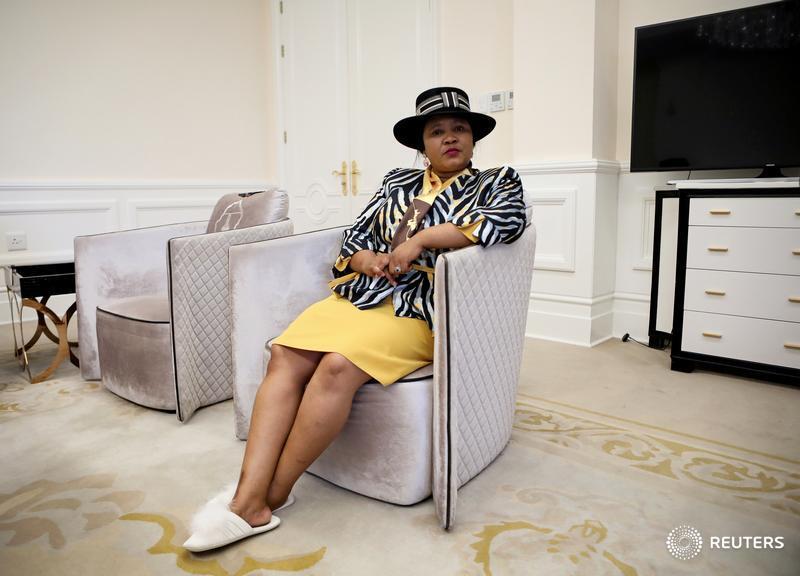
A powerful full-length portrait bSumaya Hisham of Maesaiah, wife of Lesotho’s prime minster, a short while after returning from court after being accused of murder. Her outfit matching the black decorative stripes in the furniture and the yellows in the carpet gives the image a cohesive and well-composed feel. But I think what I like most about this portrait is the fact she has comfortable slippers on. That says to me she’s at home relaxed, but she still has her hat on so she’s not been home long.  Read on here 

Maesaiah Thabane, wife of Lesotho’s Prime Minister Thomas Thabane poses for a photograph at the State House in Maseru, Lesotho, February 18, 2020.  REUTERS/Sumaya Hisham

Harsh light and a harsh out-of-focus diagonal of a rifle barrel that cuts across the regular pattern of the seated troops in Andreea Campeanu’s picture gives it a feeling of unease. In your mind’e eye, remove the rifle barrel and the tension in Andreea’s clever image is removed too.  Read on here 


People’s Defence Forces (SSPDF), South Sudan Opposition Alliance (SSOA), and the People’s Liberation Movement in Opposition (SPLM-IO) soldiers gather at the training site for the joint force to protect VIPs in Gorom outside Juba, South Sudan February 17, 2020.   REUTERS/Andreea Campeanu

Temilade Adelaja’s sombre picture of a tuk-tuk driver illustrates the ban on the vehicles that has hit the city’s transport system and the drivers who make a living from the trade. I can’t shake the feeling of a sense of a nod to Pop artist Roy Lichtenstein as if all that is missing from this image is a thoughts bubble coming from the driver’s head. Maybe it’s the striking yellow and blue in the image – what do you think? 

A corporate tricycle (tuk-tuk) driver cleans his tricycle in Lagos, Nigeria February 13, 2020.   REUTERS/Temilade Adelaja

Khalil Ashawi’s image has me emotionally confused and I can’t help feeling guilty when I look at it. I examined why. On one hand it’s an image of girls posing for a portrait, brightly coloured clothes, newly applied makeup, a gentle smile with relaxed and friendly eye contact, a picture of hope when much must feel bleak in this IDP camp. But look closer. The girl in the centre has a muddy mark on her face, make-up applied without washing her face. I assume water, let alone warm water for washing, is scarce. The girl on the right looks cold, cuffs pulled down over hands clasped together for warmth. The background is mud. I feel the warmth in the fact they still find joy in their friendship and their game of applying make-up. On the other hand, I feel guilty as I fear the situation for these children seems so hopeless. Thankfully Khalil is there to show this plight through his photography and maybe more people, and not just me, feel this angst.   Read on here 


Internally displaced girls pose for a picture at a makeshift camp in Azaz, Syria February 19, 2020.   REUTERS/Khalil Ashawi

I have added this second image from Khalil Ashawi so you get a sense of where these girls are living. 


An internally displaced woman walks at a makeshift camp in Azaz, Syria February 18, 2020.   REUTERS/Khalil Ashawi

Mohamed Salem’s picture is just beautifully lit. Even though it’s quite small in the frame your eye is drawn immediately to the face of the boy, the catch-light touching his eye. Slowly you are drawn away from him, keeping warm under blankets, and notice the holes in the corrugated iron walls and the rough hewn wood until at last you see the three other children in the foreground.   


A Palestinian boy lies on a blanket placed on the floor at his family house on a rainy day in the northern Gaza strip February 19, 2020.   REUTERS/Mohammed Salem

A slightly bizarre image by Essam al-Sudani of tonal contrast and visual confusion. One person is dressed in white, fully covered head to toe, and is touching another person who is fully covered from head to toe in black, except for her face. It takes a little while to work out what is going on. At first the metal cylinder looks like part of the frame structure she is walking under until you realize it is pots she is carrying on her head. It’s only then you look carefully at her face and realise what an affectionate picture of a strong and stoic woman this is. Not only is she having to carry all these heavy supplies, she also has to wait in line to have her temperature taken to check that she is not sick. 

An Iraqi medical staff member checks a passenger’s temperature, amid the coronavirus, upon her arrival to Shalamcha border crossing between Iraq and Iran, February 29, 2020.   REUTERS/Essam al-Sudani